Definition Statement
My project aims to incorporate both Machine Learning (ML) and Artificial Intelligence (AI) Models to help patients better diagnose and manage AD on a daily basis.
What made me choose this as my Personal Project
I have been suffering from Atopic Dermatitis (Eczema) since moving to Canada. I was always perplexed as to why my skin was red and itchy in certain areas all day. Last year, my eczema was exacerbated substantially by the sea water (I fell into the water when tubing in Nanaimo during Summer) and the skin around my lips were crusting and there was yellow liquid oozing out. In addition, the itchiness led to pain, and that pain caused both physical and psychological issues. It hurt considerably and I realized from that point on that this was a serious issue. My major problem during those days in Nanaimo was that I did not know what to do about my condition at all. Therefore, I want to develop a user-friendly tool that can help others to better manage Atopic Dermatitis.
Background Research
Atopic Dermatitis is a chronic, inflammatory disease characterized by intense itchiness, dryness, and immune and skin barrier dysfunction, influenced by genetic and environmental factors. It affects 10-20 percent of people worldwide and 15-20 percent in Canada alone. AD significantly reduces quality of sleep due to both physical and psychosocial issues. Diagnosis and treatment can be tedious and time-wasting due to the necessity of a professional dermatologist. Because Atopic Dermatitis requires ongoing self care and the long-term application of certain ointments, many patients struggle with consistent self-treatment. This project aims to incorporate both Machine Learning (ML) and Artificial Intelligence (AI) Models to help patients better diagnose and manage AD on a daily basis.
Target Audience:
The potential target audience includes patients experiencing mild to moderate Atopic Dermatitis (Eczema).
Previous Ideas:
- Designing questions that are answered well by common AI models (Chatgpt, Gemini etc) for patients to know what to ask and how to ask their questions
- Integration of “Exposome” data, analyzing the things one is exposed to on a daily basis that may be a cause of atopic dermatitis
- Can implement Psychological analysis on Atopic Dermatitis studies (Eczema has a huge effect on mental health in patients) Sentiment Analysis
- Federated Learning can be used as well to maintain privacy
- Automated treatment/feedback from AI
Prototype:
To develop the prototype, I need to accomplish 3 major milestones:
- Develop a Machine Learning (ML) / Artificial Intelligence (AI) model for identifying Atopic Dermatitis (AD) from normal / healthy skin using images from smartphone camera
- Enhance the ML / AI model with an additional images captured by another optical device (e.g., Wood’s lamp) and additional clinical / exposome data
- Design a website or an app to allow users to use this ML/AI tool to manage their AD on a daily basis
Plan
Phase 1 (Now — March 10)
Medical Literacy (What I need to Learn):
- Read Review Articles by previous researchers on Atopic Dermatitis (e.g. https://www.tandfonline.com/doi/full/10.1080/07853890.2025.2484665)
- Understand what Atopic Dermatitis is, why it is a major issue, and what are the technical and physical problems patients and physicians encounter today
- Practice ML / AI model training using Tensorflow & Jupyter Notebook to create code for identifying AD vs healthy / normal skin using smartphone images
- Develop skills for Python Coding (for later integration in Tensorflow)
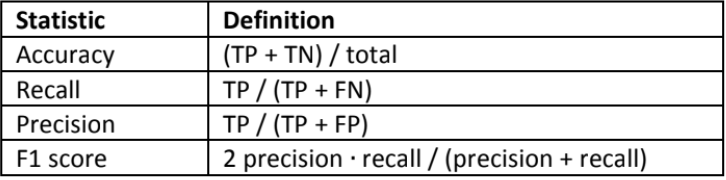
- Try three different ML / AI models (such as random forest, convolutional neural network…etc.) to compare and contrast the performance (accuracy, precision, recall, and F1 score)
- Increase amount of photos in training (50 per skin condition) and testing (20 per skin condition) datasets
Phase 2 (March 10 — March 25)
Increasing Model Complexity
- Enhance the ML / AI model with an additional images captured by another optical device (e.g., Wood’s lamp) and additional clinical / exposome data
Increasing Database
- Utilize public datasets such as Ham10000 or ISIC Archive to further train the ML AL model for better AD prediction
Phase 3 (March 25 — April 10)
Enhance the ML / AI Model and Build the Prototype
- Train a Convolutional Neural Network (CNN) to identify AD (Atopic Dermatitis) and its severity in pictures provided (Using Jupyter Notebook)
- NLP/Sentiment Branch: Build a transformer based model to analyze patient “mental health” markers based on their description of symptoms
- Combine both Vision and NLP into a single output layer: Predicted_SCORAD=f(Image_Features,Patient_Sentiment,Exposome_Data)
- Design a website / app to allow users to use this ML/AI tool to manage their AD on a daily basis
Phase 4 (April 10 — May 1)
Testing and Validation
- Validation Test: Run model against “Gold Standard” (Accurate diagnosis from dermatologist specializing in Atopic Dermatitis)
- Testing the Models: Testing how the Models handle different skin tones and lighting conditions to ensure equity and accuracy
- Other Factors: Determine which Exposome factors have the biggest influence on the flaring of atopic dermatitis
References
- Full article: Advancements in artificial intelligence for atopic dermatitis: diagnosis, treatment, and patient management
- https://dermatology.ca/public-patients/diseases-conditions/skin-conditions/eczema/
- https://docs.google.com/document/d/1Y9Qg8zkS-n3oKo1dpGN9_tkJ3qXxjSoMHYulN7c6U_I/edit?tab=t.0

Leave a Reply