- Remind your reader of the problem your solving. This should be quick with a link to the post that describes the problem in more detail. If your definition statement has changed, you’ll need to describe the reason for the change what the “new” problem is.
- What progress have you made? What have you built? What have you learned?
- What challenges have you faced? How have you dealt with these challenges or how do you plan to deal with these challenges?
- What surprises have you encountered? What have you learned that you didn’t expect?
- Do you think that you’ll make the deadline? What are you going to have to do to make sure that happens?
Problem:
There is a lack of affordable, anatomically detailed, physical musculoskeletal models that clearly demonstrate deep and superficial muscle layers and ligaments in the anatomical position and naming.
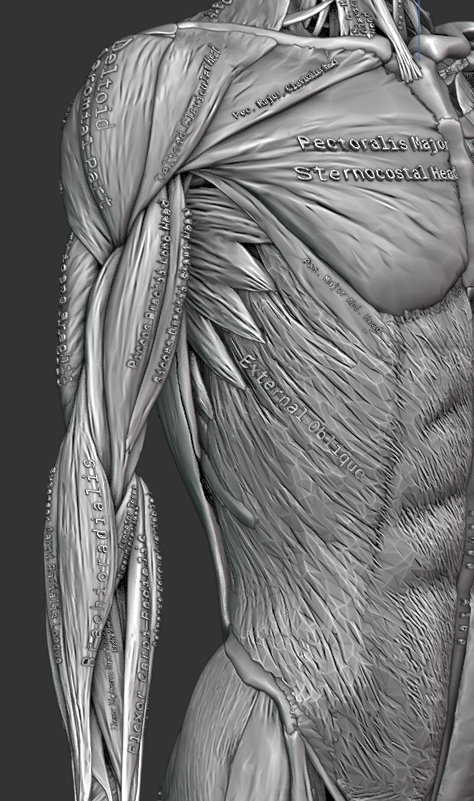
Many models that meet these criteria are also extremely pricey, upwards of thousands of dollars, and just not a good idea to get for a hobbyist or an independent learner, so our prototype will be a downscaled, 3D printed model of the musculoskeletal system in the anatomical position. There will be one deep side and one superficial side for better representation of muscles, bones and ligaments. Visible muscles are labeled in text by TA(Terminologia Anatomica) naming standards. Muscle fiber direction is made visible by colored lines, or texture running parallel to the pennation angle.
Current Progress
I am just about finished with naming the muscles, and will soon move on to making the model printable, but I still have a few key areas to cover:
- Intrinsic hand & foot muscles
- Left posterior forearm
- Diaphragm, throat(some may be skipped due to size constraints)
- Suprahyoid & infrahyoid
- TFL
- Pelvic floor muscles
- small face & eye muscles
After finishing these parts, I’ll move on to making the model printable and getting a first print out, either on the school printer or on a service. The model should be somewhere around 20-25cm tall, so it depends on the size I decide on that will dictate whether I use a service or not. The main constraint I have with the model on size is the text, as well as a few areas with very thin tendons & body parts.
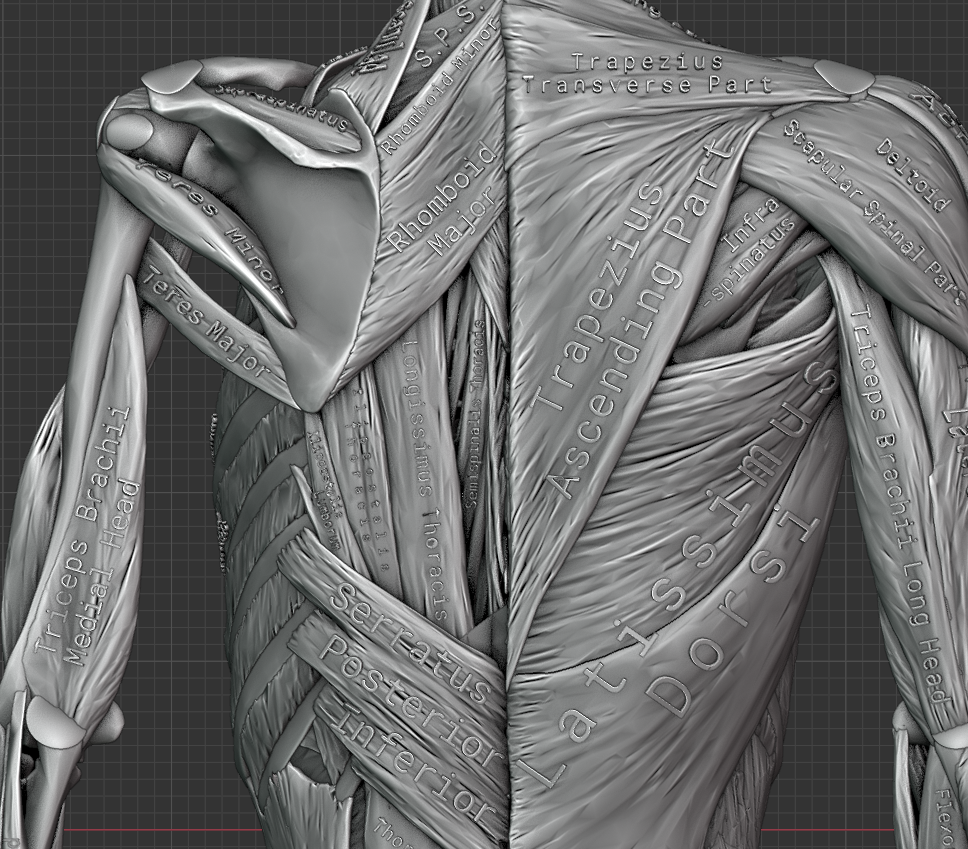
I learnt a lot about using Blender just setting up the model to edit, as well as object management, mesh editing and modifiers just doing the labeling. I also learnt a lot about the anatomy in the model I was working on.
Challenges
I encountered a few challenges during this section of my project, including scaling issues (somehow took multiple days to figure out), mesh integrity(923 non-manifold edges) and labeling issues where the text shot up into infinity after using Solidify. I solved these issues mainly by watching tutorials whenever I had time to kill(on walks, etc.) I found taking breaks from the project especially helpful to rest and think.
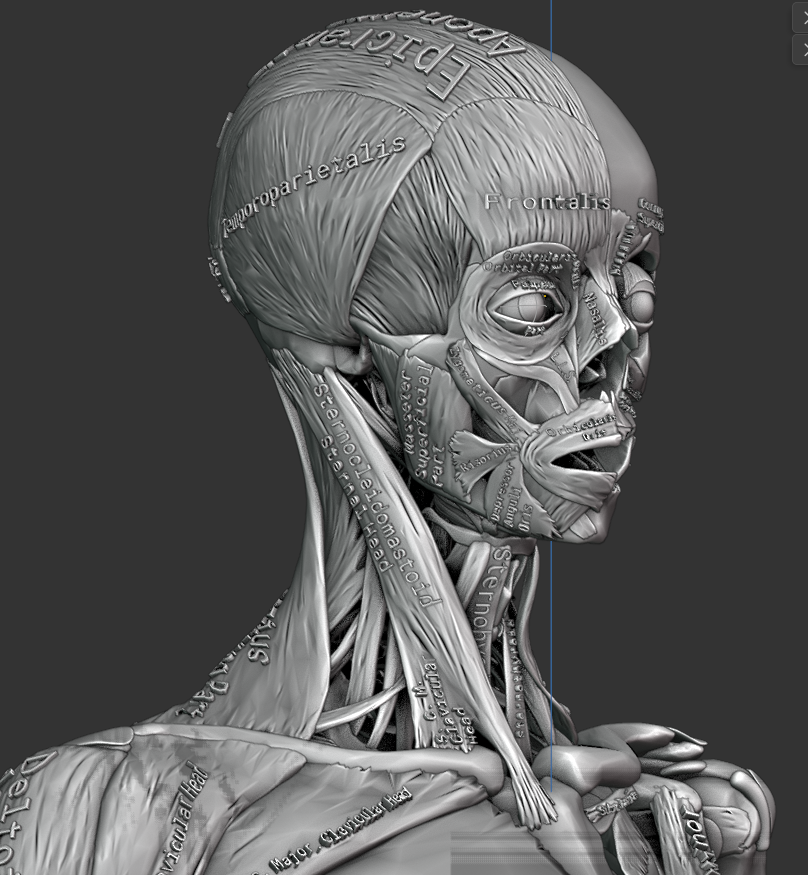
A few challenges I might face soon are scaling issues. I’m not quite sure if small objects like the dot on the “i” will print well, as well as thin tendons and structures like the trochlea of the eye. Another one is just making sure the model makes sense to the slicing software, getting rid of holes, making the model actually printable in the first place. There are 3D print plugins in Blender, and eventually I will know through slicer software or another way whether the model is printable.
In terms of surprises, I never really encountered a lot except those challenges during modeling that I faced. I didn’t expect to learn a lot about the anatomy that my project revolves around but surprisingly the model taught me a lot about anatomy, even excluding the muscles. Probably the biggest surprise of all is that I didn’t use AI for the project during this period.
Deadlines
I think the chance of me hitting the deadline is more or less a coin flip. If everything goes to plan, I’m sure that my current pace is well on track to have a finished model by May, but I do have a few buffer periods in my planning to accomodate for anything that might happen.
Throughout the post I’ve scattered a few images of the model so that it can give an estimate on my progress at the moment. The main things I should do now to make that happen are:
- Model faster, not obsess over very small details
- Do a preemptive check of the model to make sure it’s printable before actually finishing anything
Leave a Reply