For this project, my group and I decided that we will be targeting our exploration towards the Proxima Centauri B, which is an exoplanet orbiting the dwarf star Proxima Centauri. When it comes to the specific reason why we are selecting these categories below
1: Human Exploration
Proxima Centauri B is only 4.24 light-years away from us, making it the closest potential habitable exoplanet. Moreover, it is Earth-sized and rocky, there are promising water resources on this planet, and most importantly, it is considered the most promising candidate for supporting life beyond Earth.
2: Potential
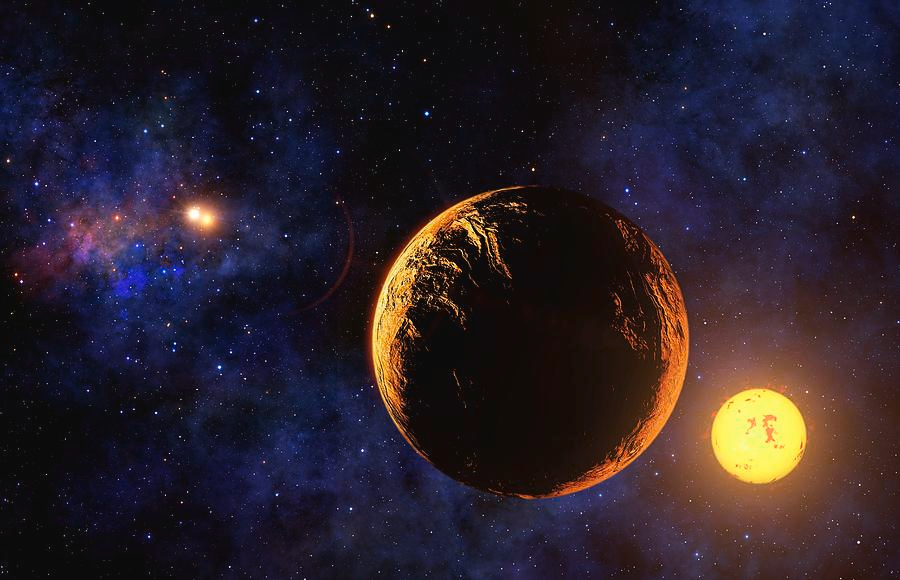
Proxima Centauri b has a solid surface instead of gas. Furthermore, it is located in a habitable zone from the star, also known as the “Goldilocks Zone,” where the temperature is just right for Liquid water to exist and for humans as well. It is located 7.5 million km away from its star. Although the distance between Proxima Centauri b and its star is much smaller than the distance between Earth and the Sun, considering that its star is a dwarf star that releases less energy and heat, which will make it suitable for biological activity as well
____________________________________________
What Opportunities present themselves on PCb
The most valuable opportunity that appeared on this planet is mostly exploring resources that can develop human’s technology level
1: Resource development and Scientific investigation
Further exploration. While exploring the planet, it is possible that we can find valuable resources. Some of them might actually adress to problems we have on Earth currently. Moreover, as a planet formed near a “Red Dwarf,” We can have some further exploration on Red dwarf stars to expand our knowledge in order to have a better understanding of the universe.
2: Potential life out of the Solar system
When it comes to exploring a planet, I think the point that everyone cares about is whether there is life appearing on that planet, especially when the target is Proxima Centauri b. According to the ALMA radio telescope, detecting the dust belt, and it seemed like there might be delivery of water. Furthermore, PCb is very similar to Earth in terms of size, and that gives a possibility of having a solid surface and even Oceans
____________________________________________
What chllenges will I face
1: Distance
Distance is one of the most significant aspect of the challenge for this plan, how to bring human to a place that is 4 light years away from us
2: Radiation
As stated that Proxima Centauri b is located near a red dwarf star which will likely be emitting solar flares that is extremely deadly.
3: Tidal Lock
Due to the distance between the two stars, there might be a tidal lock scenario. This means that the planet stops spinning and only one side gets star light while the other side don’t which will cause extreme weathers.

____________________________________________
How to design the vehicle
1: Radiation shielding
Due to the problem of radiation, a good method is to add a Radiation shield to protect the human and the mechine from the high radiation environment and ensure that all the machines will be working, I would suggest using lead and synthetic polymers to help protect the vehicle stops operating due to the strong radiation and more importantly to protect human from the strong radiation that will be likely causing serious damage towards our body.
2: Temperature and cross- country setting
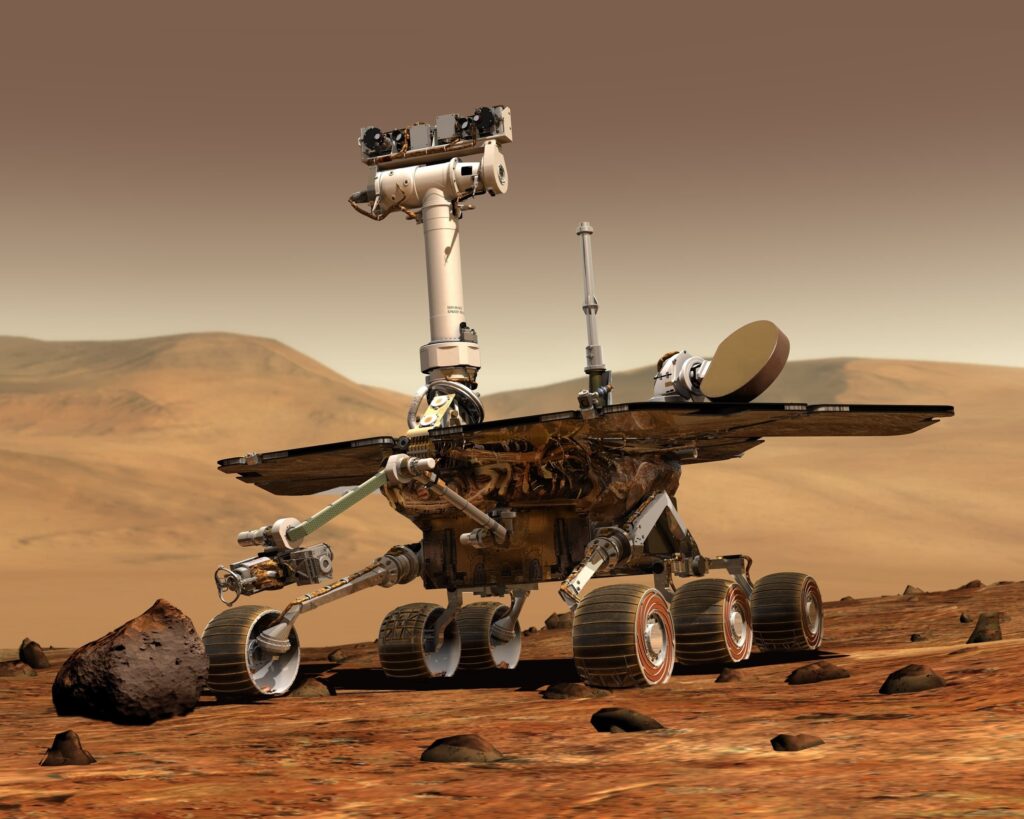
First of all, it is extremely siginificant to have thermal material to lock the heat in from flowing out in order to keep the instruments in the vehicle work instead of collapsing in extrmeme temperatures, moreover is to keep human warm and safe from some extreme weathers. Additionally, it is definitely cruecial to design the vehicle with the speciality of cross country. Since there isn ‘t any road obviously, therefore, the condition of the surface we are moving cannot be determined. In this case, a strong, reliable system that can endure harsh roud conditions is neccessary.
____________________________________________
How we know about the planet
1:European southern observatory’s telescopes in Chile
This is the first human telescope that actually discovered this planet and concluded that it is 4.24 light years away from us by using a radical velocity method. They also establish the conclusion that the distance between Earth and Proxima Centauri is the closest exoplanet from us. Moreover, they also identified the flares and chromospheric activity of the star and that gives the scientist a hypothesis of the possibility that an exoplanet might be orbitting it.
2: Pale Red Dot project
This is a project launched to prove the existence of Proxima Centauri b and they soon confirmed the theory that said that an exoplanet orbitting the Proxima Centauri b does exist by using the HARPS which is also known as the High Accuracy Radial velocity Planet Searcher which is a part of the ESO telescope.
3 Sources
A project determined the radius, the internal structure and indentified what kind of planet PCb is. Another project simulated how the planet will work with some variables.
____________________________________________
APA format citation
Brugger, B., Mousis, O., Deleuil, M., & Lunine, J. I. (2016). Possible internal structures and compositions of Proxima Centauri b. The Astrophysical Journal Letters, 831(2), L16. https://doi.org/10.3847/2041-8205/831/2/L16
Cermak, A., & Cermak, A. (2025, July 30). Proxima Centauri b – NASA Science. NASA. https://science.nasa.gov/exoplanet-catalog/proxima-centauri-b/
[email protected]. (n.d.). The Pale Red Dot campaign. ESO. https://www.eso.org/public/images/ann16002a/
Martin, P. (2019, January 21). Planet Proxima Centauri b. exoplanet.eu. https://exoplanet.eu/catalog/proxima_centauri_b–4042/
Noqtis. (2025, March 4). Proxima Centauri b: Earth’s nearest exoplanet neighbor. Starvium. https://starvium.com/planets/proxima-centauri-b
Wikipedia contributors. (2025, November 13). Proxima Centauri b. Wikipedia. https://en.wikipedia.org/wiki/Proxima_Centauri_b
Wu, Y., & Wang, Z. (2024). Progress in ionizing radiation shielding materials. Advanced Engineering Materials, 26(21). https://doi.org/10.1002/adem.202400855
____________________________________________

Leave a Reply